Crystal-Oscillator PSR Improves 802.11n EVM Performance
SDM systems, which are new to the wireless communication market, will see a positive performance impact thanks to the reference-clock crystal oscillator.
Over the past few years, Wi-Fi has evolved into the ubiquitous connectivity solution for broadband distribution within the home and office (Fig. 1). The emerging 802.11n device with improved bandwidth, security, and quality of service (QoS) will become the technology of choice for multimedia distribution.
This new trend enables wireless local-area networks (WLANs) to support emerging media-rich applications, such as game consoles, smart phones, mobile Internet devices (MIDs), Wi-Fi access points, routers, and broadband gateways that integrate modem and Wi-Fi features. According to marketing forecasts, 802.11n will take over 50% of the Wi-Fi market share, while Wi-Fi routers/gateways will reach 110 million units in 2001.
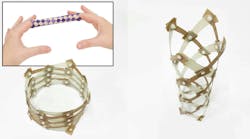
The 802.11n standard implements spatial division multiplexing (SDM) through multiple-input multiple-output/orthogonal frequency-division multiplexing (MIMO/OFDM) with wider 40-MHz bandwidth and a higher coding rate to achieve up to 600 Mbits/s. MIMO consists of multi-antenna systems with power and diversity gains that can be exploited for increased capacity (Fig. 2).
OFDM is an efficient way to resolve frequency-selective fades in a multipath environment (Fig. 3). The orthogonal is obtained by using multiples of subcarrier frequency over an integer cycle. These subcarriers are overlapped to improve spectral efficiency. OFDM performance is sensitive to the phase noise and frequency accuracy of the clock source
SDM System Requires Tight EVM
Compared to non-SDM systems, a higher signal-to-noise ratio (SNR) is required to obtain the higher data rate, and 802.11n requires approximately 6-dB higher SNR than the legacy a/b/g devices. Even though a single common crystal oscillator jointly tracks the frequency and phase of the multiple spatially multiplexed streams, the phase noise from these multiple streams isn’t perfectly correlated. Thus, the SDM system requires a better phase noise.
A mandatory higher coding rate of 5/6 has been added to 802.11n. This reduces the redundancy, robustness of the code, and receiver sensitivity. Therefore, a better phase-noise reference clock will improve the error vector magnitude (EVM) of the transmitter side. However, 802.11n requires –28-dB EVM for 64QAM (quadrature amplitude modulation) with a 5/6 code rate. A high-performance reference crystal oscillator can reduce the radio transmitter impairments and improve EVM margin for different SDM configurations.
Figure 4 explains the EVM of the 64QAM. The phase noise of the clock source crystal oscillator (XO) will increase the circular blur of the constellation stellar plot. It can be demonstrated by the additive noise picture in the II quadrant that if there are two different spur noises in the transmitter path, the small clear stellar dot will get smeared into the oval shape as the “phase + additive noise” picture in the IV quadrant. When the blurred point goes beyond the defined boundary, the data is corrupted and the bit error rate (BER) climbs for this channel.
Wi-Fi Transmitter XO
Synthesizing 2.4 GHz or 5 GHz as required for 802.11a, b, g, and n applications requires high-performance crystal clock oscillators operating at 20 or 40 MHz. Factors such as overall frequency stability, phase noise, and power-supply rejection capability are critical for ensuring continuous communications between the access point and its client users.
Typically, ±20 ppm over all conditions, including operating temperature range (commercial), initial calibration, shock, vibration, and aging, is the required frequency stability. Similarly, low phase noise is required to achieve tight channel spacing necessary for supporting up to several hundred simultaneous client connections per access point.
Due to the strict requirements for oscillator performance in the access point, router, and basestation, using a crystal clock oscillator rather than a discrete design with a quartz crystal resonator is strongly recommended. A crystal oscillator is also preferred when driving the Wi-Fi and Bluetooth combo chipset in smart-phone applications.
Want to use this article? Click here for options!
© 2010 Penton Media Inc.
Acceptable Use Policy blog comments powered by Disqus
advertisement
Latest Issue
Features:- Motion Processing: The Next Breakthrough Function In Handsets
- Bluetooth Moves Beyond The Earpiece To Rule Other Applications
- Apple Stays In The Spotlight With iPhone 4
Most Popular Stories
advertisement
advertisement